Learning how to manage association work well is not only about keeping records neat. It is about building a system that helps people trust the association, pay dues on time, attend meetings, vote with confidence, and feel that their membership actually means something.
Most associations do not fall apart because leaders are lazy. They struggle because the work grows quietly. A few members become fifty. One treasurer spreadsheet becomes five versions. Meeting minutes sit in someone’s inbox. A member says they paid, but nobody can find the receipt. A board election is coming, yet the voter list is not clean. Before long, good volunteers are spending their evenings chasing missing information instead of serving the mission.
That is why association management needs structure. Whether you run a professional association, alumni group, cooperative society, nonprofit membership body, community organization, club, or trade group, the same truth applies: people join for value, but they stay when the association is organized, responsive, and fair.
This guide walks through how to manage association operations in a practical way, from member records and dues to meetings, documents, communication, voting, reports, and digital tools. It is written for real association leaders who have to make things work with limited time, limited staff, and members who expect clarity.

What Does It Mean to Manage an Association?
To manage an association means to coordinate the people, rules, money, records, meetings, communication, and decisions that keep the organization alive. It is part administration, part leadership, part finance, part member care, and part governance.
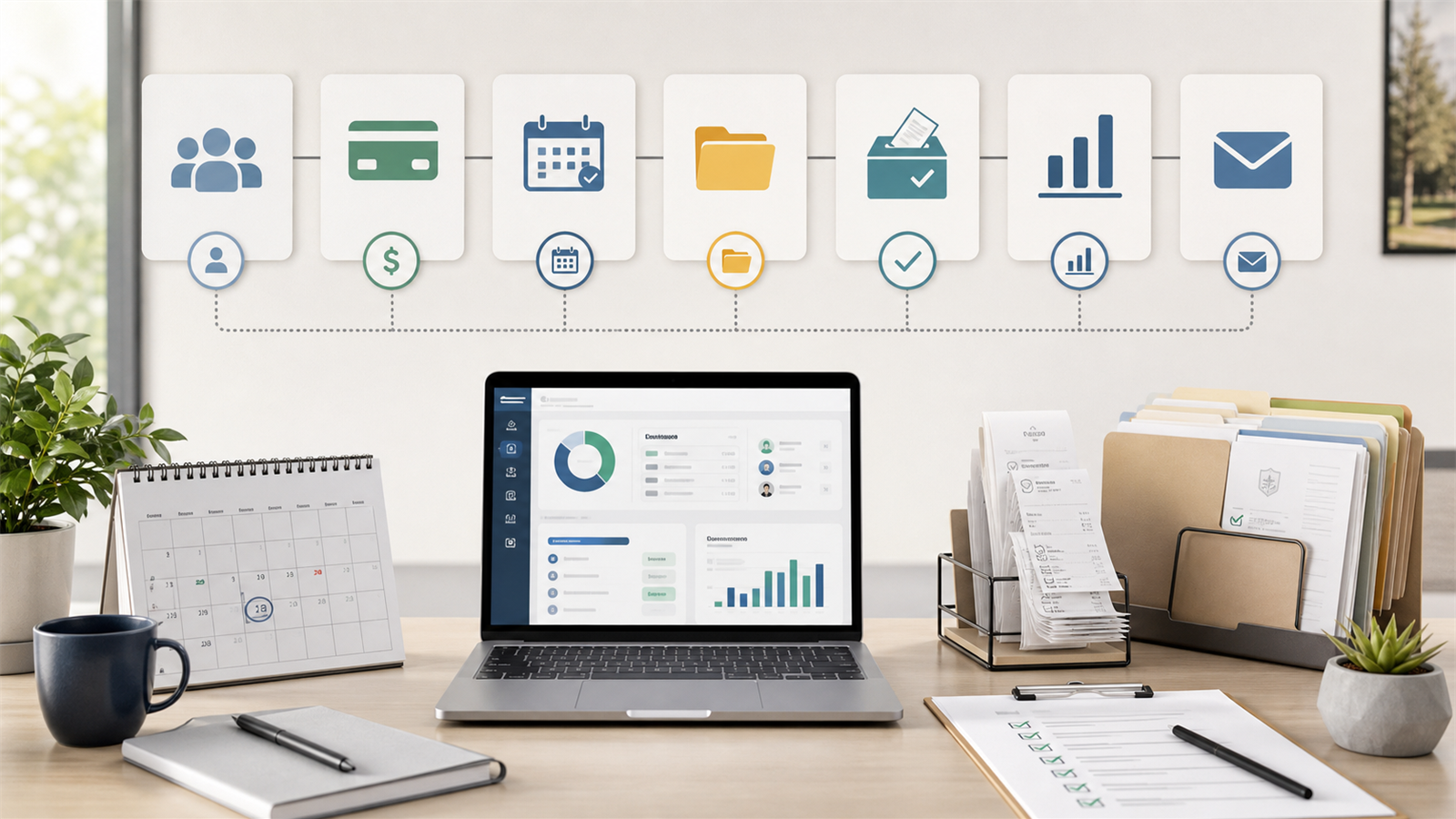
In simple terms, association management answers seven questions:
- Who are our members, and what is their status?
- What dues, contributions, or fees do they owe?
- What meetings, events, and decisions are coming up?
- Where are our documents, minutes, policies, and records?
- How do we communicate with members clearly and on time?
- How do we run fair voting, elections, and approvals?
- How do leaders see what is working and what needs attention?
If those questions are easy to answer, your association feels organized. If they are hard to answer, members start feeling the confusion even before leaders admit there is a problem.
Modern tools such as Asovex exist because association work has moved beyond paper files and scattered spreadsheets. Members now expect digital records, quick updates, online payments, easy access to documents, and transparent decision-making. The right system does not replace leadership. It gives leadership room to breathe.
Start With the Purpose, Not the Software
Before you choose tools or rebuild your processes, write down the association’s core purpose in plain language. This may sound basic, but many operational problems come from losing sight of why the association exists.
A professional association may exist to advance a profession, support career growth, and protect standards. A community association may exist to improve local welfare and coordinate shared projects. An alumni association may exist to keep graduates connected and support the institution. A cooperative may exist to pool resources and serve members fairly.
When the purpose is clear, management decisions become easier. You can decide which member data matters, what reports leaders need, how dues should be structured, what meetings are essential, and which communications deserve priority.
For example, if your association’s main value is professional development, then event attendance, certification records, resource access, and member engagement should be tracked carefully. If your association’s main value is community welfare, then project updates, volunteer participation, contributions, meeting minutes, and impact reports may matter more.
Good association management begins with this question: what must we manage well so members can experience the value they joined for?
Build a Clean Member Database
The member database is the heart of the association. If member data is messy, everything else becomes harder. Dues reminders go to the wrong email. Attendance records do not match active members. Voting eligibility becomes questionable. Reports lose credibility. Leaders spend more time asking “who is current?” than planning useful work.
A clean member database should include the basics: full name, email, phone number, membership category, join date, status, role, dues status, and any important preferences. Depending on your association, you may also need profession, chapter, location, committee, employer, emergency contact, or membership number.
But do not collect data only because you can. Collect data because it helps the association serve members better or meet a governance requirement. Too many unused fields create noise. Too few fields create blind spots.
Set a simple rule: every member should have one official profile, one current status, and one reliable contact path. If your association has duplicate records, old emails, missing phone numbers, or unclear membership categories, clean those first before trying to automate anything.
A platform with proper member management features can help you centralize profiles, track status, and reduce the manual work of updating records. Even if you are not ready for a full system yet, start by agreeing on one source of truth. Not three spreadsheets. Not one notebook plus one email thread. One source.
Define Membership Types and Rules Clearly
Many associations grow confused because membership rules live in people’s memories instead of in a documented system. A secretary may know who qualifies for student membership. A treasurer may know which members pay reduced dues. A president may know who can vote. But if that knowledge is not written down, the association becomes dependent on individuals instead of process.
Define your membership categories clearly. Common examples include regular members, associate members, student members, honorary members, corporate members, life members, committee members, and inactive members. For each category, write down:
- Who qualifies for the category
- What dues or fees apply
- What benefits the member receives
- Whether the member can vote
- Whether the member can hold office
- How renewal, suspension, or reactivation works
This is not paperwork for its own sake. It protects fairness. Members are more likely to accept decisions when the rules are visible and consistent.
Once the rules are clear, put them into your onboarding process, member handbook, website, and management system. If you use Asovex, you can connect membership records with dues, roles, and access levels so the association does not have to remember everything manually.
Create a Reliable Dues and Contributions System
Money is one of the most sensitive parts of association management. Even small associations need a clear way to track dues, contributions, invoices, receipts, refunds, outstanding balances, and financial reports. Without that clarity, members lose trust quickly.
A good dues system should answer these questions without drama:
- Who has paid?
- Who has not paid?
- How much is outstanding?
- When is payment due?
- Which payment method was used?
- Was a receipt issued?
- Which dues rule or campaign does the payment belong to?
Set dues rules before collection begins. Decide whether dues are monthly, quarterly, yearly, event-based, chapter-based, or member-category-based. Decide whether you will charge late fees, offer grace periods, or allow partial payments. Decide who can approve adjustments.
Then document the process from invoice to receipt. A member should never have to beg for confirmation after paying. A treasurer should never have to search multiple accounts to prepare a report. A board should never approve a budget using numbers that nobody can verify.
Digital tools make this much easier. Asovex includes dues tracking, invoices, receipts, financial reports, and multi-currency support in its broader association management tools. That matters because many associations now collect payments across different countries, chapters, or member groups. When the finance system is organized, the treasurer can focus on stewardship instead of cleanup.
Keep Meetings Organized From Agenda to Minutes
Meetings are where association decisions become visible. Poor meeting management creates frustration because members feel their time is wasted. Strong meeting management builds confidence because people can see what was discussed, what was decided, and who is responsible for the next step.
Every important meeting should have a simple lifecycle:
- Plan the agenda
- Invite the right people
- Share supporting documents early
- Record attendance
- Capture motions, discussions, and decisions
- Assign action items
- Approve and store minutes
- Follow up before the next meeting
This is where many associations lose momentum. They hold meetings, but decisions disappear after everyone leaves. Action items are mentioned but not tracked. Minutes are written late or stored privately. New board members cannot understand past decisions because records are scattered.
To fix this, standardize your meeting process. Use one agenda template. Store minutes in one document vault. Keep attendance tied to member records. Link decisions to documents or voting items when possible. If your association holds board meetings, annual general meetings, committee meetings, or project meetings, each one should leave a clear record behind.
The Asovex workflow is built around this kind of operational continuity: set up the association, configure roles, manage members, track dues, schedule meetings, store documents, and generate insights from the same environment.
Store Documents Where Leaders and Members Can Find Them
Every association has documents that matter: constitution, bylaws, policies, meeting minutes, financial reports, project files, member forms, agreements, permits, receipts, election records, and board resolutions. The problem is not usually that documents do not exist. The problem is that nobody knows where the latest version is.
A strong document system should have three qualities: structure, permissions, and history.
Structure means documents are grouped logically. For example, you may have folders for governance, finance, meetings, projects, members, policies, elections, and reports.
Permissions mean the right people can access the right documents. A member may need meeting minutes and general policies. A treasurer may need financial records. A board member may need governance files. A public visitor may need only basic information.
History means important documents do not vanish when leadership changes. New officers should not have to start from nothing because the previous secretary kept records on a personal laptop.
This is one of the quiet benefits of using a proper digital platform. A secure document vault keeps institutional memory inside the association, not inside one person’s inbox.

Communicate Like Members Are Busy People
Members miss updates for many reasons. They are busy. They changed email addresses. Messages are too long. Announcements are sent too late. Important information is buried inside group chats. Sometimes the association communicates often, but not clearly.
Good communication is not about sending more messages. It is about sending the right message to the right people at the right time.
Start by separating communication types. Operational reminders are different from newsletters. Dues notices are different from event invitations. Emergency updates are different from board reports. New member onboarding is different from renewal communication.
Use clear subject lines. Keep messages short where possible. Put the action near the top. Tell members what changed, what they need to do, and by when. If the message is only for a committee, do not send it to everyone. If the update affects all members, do not hide it in a private thread.
As your association grows, communication should become more segmented. Active members may need different updates from inactive members. Board members may need deeper reports than general members. Members with outstanding dues may need payment reminders, while paid members may need receipts or event notices.
That is why communication works better when it is connected to member data. When records, dues, roles, and announcements live in one system, leaders can communicate with more accuracy and less stress.
Protect Governance With Clear Roles and Permissions
Association leaders often focus on features first, but governance depends heavily on access control. Not everyone should be able to change financial records. Not everyone should see private member data. Not everyone should edit official documents or publish announcements.
Clear roles protect the association and the people serving it.
Common roles include association admin, president, secretary, treasurer, committee chair, board member, regular member, and auditor. Your association may use different names, but the principle is the same: each person should have access based on responsibility.
Role-based access helps prevent accidental edits, privacy issues, financial confusion, and disputes over authority. It also makes leadership transitions easier. When a new treasurer takes office, you update the role instead of handing over passwords informally. When a committee ends, you remove access cleanly.
This is especially important for associations that handle dues, member personal data, elections, compliance documents, or sensitive meeting records. Trust is not built only by good intentions. It is built by systems that make responsible behavior easier.
Run Voting and Elections With Confidence
Voting can strengthen an association, but only when members believe the process is fair. If eligibility is unclear, ballots are confusing, results are delayed, or records are incomplete, voting can become a source of conflict.
Before any vote, define the basics:
- What is being decided?
- Who is eligible to vote?
- When does voting open and close?
- Is the vote anonymous or recorded?
- What result is needed to pass?
- How will results be shared?
- Where will voting records be stored?
For elections, you may also need nominations, candidate profiles, campaign rules, ballot design, tie-breaking rules, and observer access. For motions or policy decisions, you may need supporting documents and meeting links.
The key is to connect the vote to the association’s official records. Voting should not be a random poll in a chat group if the outcome affects governance. It should be tied to eligible members, meeting context, documents, and final results.
Asovex includes e-voting and governance workflows as part of its broader platform, which is useful for associations that want decisions to be both convenient and traceable. You can explore more on the features page.
Use Reports to Lead, Not Just to Look Back
Reports are not only for annual meetings. They help leaders see the health of the association while there is still time to act.
At minimum, an association should review reports in these areas:
- Membership growth and decline
- Active, inactive, and overdue members
- Dues collected and outstanding balances
- Event and meeting attendance
- Document activity and compliance records
- Voting participation and governance outcomes
- Member engagement trends
Good reports should lead to decisions. If member renewals are dropping, leadership can improve onboarding or benefits. If dues are late every quarter, the payment process may need reminders or simpler options. If meeting attendance is low, the schedule or agenda may not match member needs. If only a small group votes, members may not understand why decisions matter.
Reports turn scattered activity into leadership insight. That is why financial reports, dashboards, exports, and analytics are not luxury features. They are part of responsible management.
Create a Simple Operating Calendar
One practical way to manage an association better is to build an operating calendar for the year. This calendar should include more than events. It should include the rhythm of administration.
Add renewal periods, dues deadlines, board meetings, annual general meetings, committee reports, budget planning, audit preparation, election dates, project milestones, member surveys, newsletter dates, and compliance deadlines.
When these dates are visible early, the association stops living in emergency mode. Leaders can prepare reports before meetings. Members receive notices before deadlines. Treasurers can plan cash flow. Secretaries can organize documents gradually instead of rushing before an annual meeting.
The calendar does not need to be complicated. What matters is consistency. A simple yearly rhythm is better than a perfect plan nobody follows.
Onboard New Members Properly
Many associations put effort into recruiting members but forget the first weeks after someone joins. That is a mistake. New members decide quickly whether the association feels organized and valuable.
A strong onboarding process should welcome the member, confirm their profile, explain dues or renewal rules, show where to find documents, introduce upcoming meetings or events, and explain how to contact leaders. If members have access to a portal, show them how to log in and update their information.
Keep onboarding human. Automation can help, but the tone should not feel cold. A simple welcome message from a leader, a clear next step, and a useful resource can make a new member feel included.
Asovex supports member onboarding as part of its association workflow, from sign-up and import to configuration and active management. You can see the general process on How It Works.
Do Not Let Volunteers Carry the Whole System in Their Heads
Many associations depend on volunteers, and volunteers deserve systems that respect their time. If one person has to remember every dues rule, every member status, every document location, and every meeting follow-up, the association is fragile.
Build processes that survive leadership changes. Write down recurring tasks. Use templates. Keep records in shared systems. Assign roles clearly. Review reports regularly. Store official documents where the next officer can find them.
This is not about removing the personal touch from association work. It is about protecting the people who give their time. A well-managed association should not burn out its best members.
Choose the Right Association Management Software
You can manage a very small association with spreadsheets for a while. But as the association grows, spreadsheets start costing more than they save. The cost shows up as confusion, duplicated work, missed payments, weak reports, and tired volunteers.
When choosing association management software, look for tools that match your real workflow. A good platform should help with member records, dues, invoices, receipts, meetings, documents, reports, communication, roles, and voting. It should also be simple enough for non-technical leaders to use.
Before choosing a platform, ask these questions:
- Can we manage members and statuses clearly?
- Can we track dues, payments, invoices, and receipts?
- Can we schedule meetings and store minutes?
- Can we control who sees or edits sensitive data?
- Can we generate reports leaders actually need?
- Can members access the information meant for them?
- Can the platform grow with us?
Asovex was built for associations that need this kind of connected system. You can review the full feature list, compare pricing plans, or start from the main Asovex website to see how the platform is positioned.
A Practical Checklist for Managing an Association
If you want a simple starting point, use this checklist. You do not have to fix everything in one week. Start with the areas causing the most stress.
- Write down the association’s purpose and main member value.
- Create one official member database and remove duplicates.
- Define membership types, dues rules, and voting rights.
- Set a clear process for invoices, payments, receipts, and overdue dues.
- Use one meeting agenda and minutes format.
- Store official documents in one organized location.
- Create role-based access for leaders, officers, and members.
- Build a yearly operating calendar.
- Segment communications so members receive relevant updates.
- Review membership, finance, attendance, and engagement reports monthly.
- Document leadership handover steps before officers change.
- Move repetitive work into a digital platform when manual work starts slowing the association down.
Common Mistakes Associations Should Avoid
The first mistake is waiting too long to organize records. It is much easier to clean fifty member profiles than five hundred. Start early, even if the system is simple.
The second mistake is treating dues collection as a side task. Dues are part of member trust. If invoices, balances, and receipts are unclear, members may question the association’s financial discipline.
The third mistake is holding meetings without follow-up. A meeting that produces no record, no action list, and no accountability becomes a repeated conversation instead of progress.
The fourth mistake is over-communicating without structure. Members do not need endless messages. They need timely, clear, relevant updates.
The fifth mistake is giving too many people access to sensitive data. Good governance requires clear permissions.
The sixth mistake is choosing tools only for today’s size. Your association may be small now, but if growth is part of the plan, choose processes that can scale without forcing a painful migration later.
How to Manage Association Growth Without Creating Chaos
Growth is good, but unmanaged growth can make an association feel less personal and less organized. The goal is not just to add members. The goal is to keep the association useful as it grows.
As membership increases, review your structure. Do you need committees? Do you need chapters? Do you need different membership categories? Do you need better reporting? Do you need an online payment flow? Do you need a clearer document policy? Do you need a voting system that can handle more people fairly?
Growth should also push you to improve member experience. Members should be able to update their details, understand their dues status, find documents, receive meeting updates, and participate in decisions without chasing officers privately.
This is where a platform like Asovex can become useful. The association does not have to stitch together separate tools for members, payments, meetings, documents, and reports. A connected platform gives leaders a more complete picture and gives members a cleaner experience.
Final Thoughts
The best way to manage an association is to make important things easy to see, easy to update, and easy to trust. Members should know where they stand. Treasurers should know what has been paid. Secretaries should know where records live. Leaders should know what needs attention. New officers should be able to continue the work without starting from zero.
If you are searching for how to manage association operations because your current process feels heavy, start with the basics: clean member records, clear dues rules, organized meetings, accessible documents, careful communication, fair voting, and useful reports. These are not separate chores. Together, they form the operating system of a healthy association.
And when your association is ready for a more connected way to work, Asovex brings those pieces into one platform. Visit Asovex, explore the association management features, review the plans, or read more practical guides on the Asovex blog.
Frequently Asked Questions
What is the best way to manage an association?
The best way to manage an association is to centralize member records, define clear dues and governance rules, organize meetings properly, store documents securely, communicate consistently, and use reports to guide decisions. A digital platform can make this easier by keeping these tasks connected.
How do you manage association members effectively?
Manage association members effectively by keeping one clean member database, tracking membership status, segmenting members by category or role, updating contact details regularly, and connecting member records to dues, meetings, communication, and voting eligibility.
Why do associations need dues management?
Dues management helps an association track payments, outstanding balances, invoices, receipts, and financial health. It also improves transparency because members and leaders can understand what has been collected and what is still pending.
How can small associations stay organized?
Small associations can stay organized by using simple templates, one official member list, a shared document location, a yearly calendar, clear meeting minutes, and a consistent dues process. As the association grows, moving to association management software can reduce manual work.
What features should association management software include?
Association management software should include member management, dues tracking, invoices and receipts, meeting management, document storage, role-based access, reporting, communication tools, and voting or election support. The right mix depends on the size and structure of the association.
Can Asovex help manage associations?
Yes. Asovex helps associations manage members, dues, meetings, documents, financial reports, communication, roles, and governance workflows in one platform. You can learn more from the How It Works page or compare options on Pricing.